Blog › Founder AI › Back office
READBack office
The easiest fat to trim is your software
Costs are rising everywhere. Your software stack is where the waste hides, and AI has made the alternative affordable.

As costs rise across the board, the biggest piece of fat most small businesses can trim sits in their software subscriptions. Rent, payroll and insurance are difficult to reduce, but a subscription you don't use is easy to cancel once you notice it.
I've spent 25 years in hospitality and technology, and I've paid for software I never used. The first example I found in my own audit was menu engineering, a module in my point-of-sale (POS) system that scores menu items on profit and popularity. It was too complicated to set up for what it would have saved, and my team wasn't ready, so it sat unused.
That is a common pattern in software waste: you pay for breadth that was built for a larger operation. AI has changed the other side of that math, because tools built to fit one business now cost far less to make.
Key takeaways
- Software prices are climbing far faster than inflation, and many businesses pay for tools nobody opens.
- For a small office, a few unused subscriptions can take a real share of profit.
- Personalized white label software is built once, then fitted and branded for each business that runs it.
- AI has made fitted tools cheaper to build, and knowing your business matters more than knowing code.
- Keep the core system that runs your business. Build or license the tools around it, and never let them touch card numbers.
Why is software the first place to cut?
Vertice, a software procurement company, measured software price inflation at a record 16.4% in June 2026. It says that rate is more than four times U.S. inflation. Its preliminary figure for September was 14.3%.
The largest vendors are part of the trend. On July 1, 2026, Microsoft raised its 365 Business Basic plan from $6 to $7 per user per month, about 17%, citing added AI, security and management features. In June 2025, Slack raised its Business+ plan from $12.50 to $15 per user per month on annual billing, a 20% jump.

Use hasn't kept pace with the bills. Zylo, which sells software-tracking tools, found that organizations use only about half (54%) of the licenses they pay for. Zylo's customers are mostly large companies, so treat that as a big-company number.
Okta, an identity company, found that businesses with 50 or fewer employees averaged 36 apps in 2023. It counted only apps tied to its sign-in service, so the figure undercounts. No current count of paid subscriptions exists for firms your size, so the audit linked below asks you to count your own.
The Small Business Administration counts 36.2 million U.S. small businesses, employing 45.9% of private-sector workers. For each, an unused tool is lost profit.
Here is a made-up 12-person insurance agency in round numbers, not an industry average.
| A made-up 12-person insurance agency | Per year |
|---|---|
| Revenue | $1,200,000 |
| Pre-tax profit | $120,000 |
| Software bill ($125 per person per month) | $18,000 |
| Software as a share of profit | 15% |
| Profit after cutting $4,500 of unused software | $124,500 |
None of this is a criticism of the products themselves. All-in-one office platforms, such as suites, CRMs and practice-management systems, are often excellent. Microsoft 365 is a fair example, bundling email, documents, storage and video meetings.
The issue is fit. A platform that broad serves as many customers as possible, so a small office pays for features built for someone else.
What does "personalized white label software" mean?
White label isn't new. Some software companies, including point-of-sale makers, let resellers rebrand their systems and sell them as their own. What's new is the personalized part: software that fits the way one business runs, at a price a small business can carry.
Three kinds of software that fit
- Tools built around the system you keep. You stay on the core system that runs your business (your accounting, booking, CRM or POS system) and add what it lacks. My catalog tool is one example.
- A product built for one business, then licensed to others. One code base serves every customer, and each install carries its own name and brand.
- A small tool you own outright. It does one job, and it has no seat count or renewal date. My voice recorder is one.
The first kind is where most owners should start. Keep the system that takes the money, and build the tools it lacks. You stop paying for modules that don't fit, and the payment side stays with a processor built to handle it.
"Keep the system that takes the money. Build the tools it lacks."
I expect the second kind to define the next decade. A builder solves one business's real problems, then fits the same product to the next owner instead of starting over.
Why is this happening now?
Two things changed at once: the cost of building fell, and the skill it takes shifted toward people who know the work.
As of Oct. 20, 2026, most paid plans for the major AI coding tools cost $10 to $200 a month. Claude's Pro plan is $20 a month and includes Claude Code, which writes software from plain-English instructions. These plans have usage limits, so heavy building costs more than the sticker price.
In June 2026, Anthropic published a study of about 400,000 Claude Code sessions. In sessions that produced code, people in software jobs reached verified success 34% of the time, against 29% for people in other jobs.
Those rates aren't high, and the study judged success from session transcripts, not from results in a real business. Still, the gap between software workers and everyone else was only five points. Anthropic's conclusion was that understanding the work mattered more than coding skill.
Owners are the people who understand the work. You can name the report you need on Monday morning and the step your team skips because the screen is clumsy. That knowledge used to need a developer to translate it. Increasingly, it doesn't.
AI has made owning your software massively cheaper, and next to that, subscription fees look crazy.
Hosting also costs less than most owners expect. My practice copy of one system runs on a hosted server for about $3 a month. It holds demo data, not a live business, so treat it as a floor, not a quote.
That gap between server cost and subscription price is one of the biggest ways software companies mark you up.
What I've built
These are tools I built with AI and the job each one does.

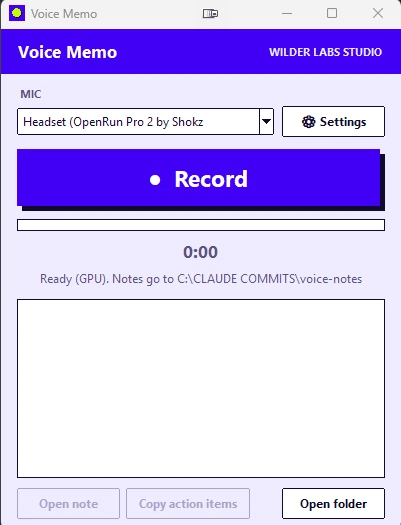
Typing is the single greatest waste of time in office work, so I built a way around it. Using Claude Code, I made a voice recorder that records and transcribes on my PC, and it recorded the rants this series grew from. For the idea without the build, start with Stop typing: talk your first drafts.
My catalog tool is the clearest case of building around a system instead of replacing it. It pulls the item catalog from a point-of-sale system into a local database for mass edits and cleanups, then pushes the changes back. Daily edits stay in the main system.
Debt Payoff Lab started as my household's own debt planner, and I later turned it into a product. The numbers stay on the user's computer, and it's a one-time purchase, not a subscription. A tool built for one family is now open to many, which is the thesis in a single product.
At business scale, I built a catering system for one company and then made it one code base that can carry any caterer's name.
None of these is large, but each fits a job the way I do it, with no features I'll never open.
What shouldn't you build?
Some things belong with a specialist, no matter how good the tools get.
- Your own payment system. Building one is possible, but payment compliance and network routing make it difficult. A basic POS or payment service is fine. The value is in the tools around your core system.
- Anything that touches card numbers. Your tools should never see them. Take payments through your processor's hosted payment fields, which keeps most of the card-security work with the processor. Your business still has to stay PCI compliant.
- Code nobody reviews. In Veracode's 2026 tests, reported in July, AI-written code failed security checks about 44% of the time when the models received no security-specific guidance. Someone with experience should review anything that holds client data.
Owners with no software expertise shouldn't build their own tools. If you've never run a software project and have no one to call when it breaks, license a tool from someone who has.
Whoever builds it, put two things in writing: you own your data, and you have a way out. A tool that fits today should never become the next trap.
Five years, then a decade
Within five years, I expect white label software for small businesses to take off, and the shift will be obvious. Over the decade, personalized white label software will change how small businesses buy software altogether.
Today, a small business rents seats on a platform built for the most customers. As fitting a product to one more customer gets faster and cheaper, a builder who knows a trade can afford to serve a 12-person business. The owner then licenses a product shaped to the operation, under the business's own name.
Gartner, the research firm, estimates that up to $234 billion of enterprise application software spending is at risk from AI agents through 2030. That forecast covers large companies, not yours, but it points the same way.
The counterpoints are real. The big platforms are adding AI of their own, so many owners will stay with them. A fitted tool also needs someone to maintain it after launch, which is why the builder matters as much as the code.
The best argument against my view comes from Benedict Evans, a technology analyst: "most people are not tool builders." He's right. Most owners won't build their own software, and they shouldn't have to. That's the case for white label. One builder makes a tool once, and many owners run it under their own name.
Common questions
How do I cut software costs for my small business?
Write down every subscription, what it costs and who used it last month. Cancel what nobody opens, then look for paid modules inside the tools you keep. After that, ask what a small tool built around your core system could replace.
Is white label software cheaper than a subscription?
It can be, but price isn't the only test. Some white label tools are a one-time purchase, and some carry a monthly fee. Compare the total cost over a few years, and check that the tool fits how you work.
Can AI build software for my business?
Yes, for many jobs. Small tools for reports, client intake, proposals, scheduling and data cleanup are within reach for an owner with a Claude Pro plan and a clear description of the work. Larger systems need someone with software experience, and payments belong with your processor.

Jef Wilder
Twenty-five years in hospitality and technology, across business development, project management, tech and sales. He helps founders and professionals over 40 put Claude to work, one task at a time.
If you'd like to train the team you already have, keep an eye out for my upcoming workshops. If you have a story about putting AI to work in your business, you can also ask to come on the podcast.
Founder AI is an independent series by Jef Wilder. It is not affiliated with, sponsored by, or endorsed by Anthropic. Claude is a trademark of Anthropic.
Published by Wilder Labs Studio